
Amanda Buchanan: Living & leading with Clarity, Confidence & Compassion
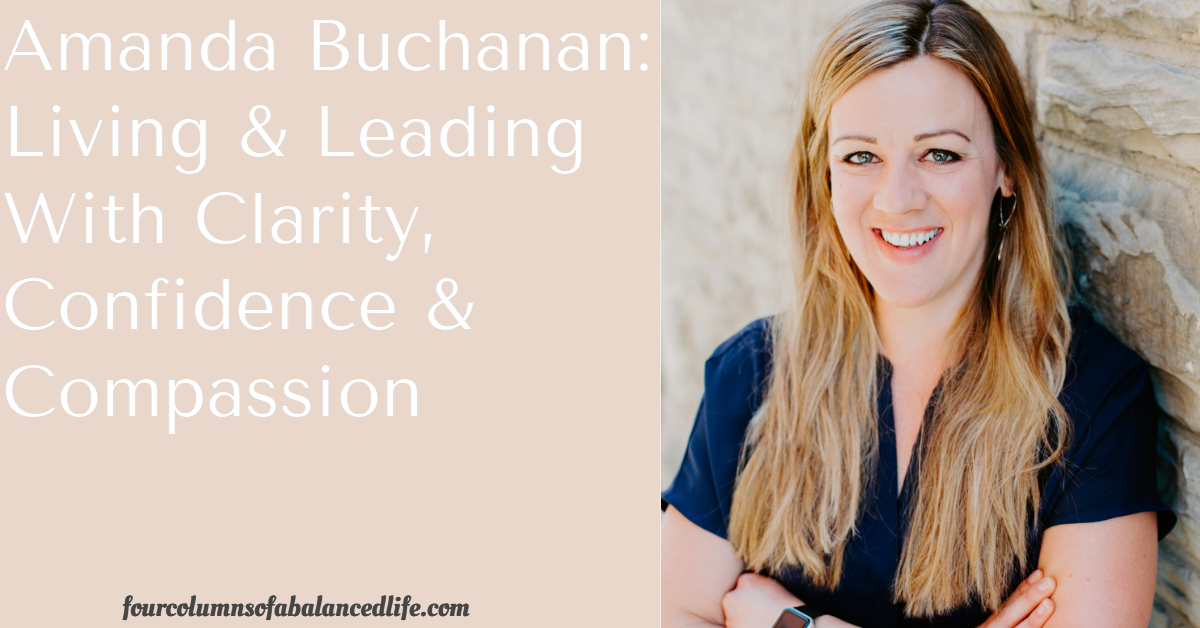
The journey of Amanda Buchanan is anything but ordinary. The oldest of 7 siblings, she just thought it was “normal” to take responsibility and take charge. It wasn’t until later in life that she realized her “bossiness” was actually a manifestation of her leadership & executive management skills, which had been evident at a young age. It was only in her late twenties that someone used the word “leader” in relation to her influence and skills, and since that time, she has not only leaned into her own leadership but also championed other women to do so as well. Her work experience and personal story became the catalyst for a decade-long partnership with coaching. This journey not only reshaped her career but also strengthened her identity, values, and voice as a woman navigating male-dominated spaces.
At Four Columns of a Balanced Life, we believe every woman carries a story worth learning from. One that can spark transformation, courage, and clarity for others. Today, we dive into the heart of Amanda’s journey as a life coach and leader.
In this conversation, I wanted to know something unique about her—what shaped her, what ignited her passion, and what continues to fuel her mission to guide women and leaders toward authenticity, awareness, and wholeness. Amanda brings a blend of spiritual wisdom, clinical insight, and real-world leadership experience that makes her coaching style deeply human and refreshingly practical.
Her story is a reminder that empowerment doesn’t begin when we “have it all together,” but when we’re willing to grow, ask better questions, and lead from who we truly are.
What inspired you to become a life coach, and was there a defining moment that led you down this path?
In my late 20s, I found myself in a leadership position where I was way over my head. Not only did I need to learn new skills, but I was working way too much. I was so desperate for help that when someone offered to connect me with a coach, I said yes, not even fully understanding what coaching was. I just knew counselling wasn’t what I needed. I have had a coach for the last decade and never looked back! The journey was transformative, not only for my leadership and my life, but for my career trajectory.
Amanda can you be more specific about the changes you saw back then?
There was a huge learning curve in self-awareness [think Myers-Briggs, personal values, strengths, spiritual gifts, motivations; to name a few] and how this impacted my leadership. I learned to adapt and consider what other people needed and expected from me, and lean into how I was wired to lead from a place that was authentic to me. I started to understand that work could not consume me, but I was actually a better leader when I was living a life that was fuller, by developing creative outlets, physical care and a supportive social system. I fully believe that the best gift a leader can give their organization is holistic health. I could keep going, but I’ll stop there.
What is the difference between coaching, counselling and consulting?
At a basic level: counselling looks at the past and coaching looks ahead to the future. Counselling might ask: where did you come from? And what happened to you to shape who you are today? Coaching will ask: where do you want to be in a year, or three years and how do you get there? Or who do you want to be in a particular situation? Both counselling and consulting place the expectation of expertise on the consultant or counsellor. Good coaching makes the one being coached the expert, and with wise questions and observations helps the coachee discover things about themselves.
How has your own personal growth journey shaped the way you coach others?
I am a female who worked in a male-dominated field and I had to push through a lot of obstacles and stereotypes about what was “appropriate” for a woman to do, as well as what was considered “feminine” or not. For example: the fact that many times for women confidence and assertiveness often times is mistaken for aggression or even said to be “masculine.” Or the shame many women feel when their emotions emerge in a work-place setting, when in reality their emotions can be a gift to their colleagues if they have done the work of self-awareness and staying healthy. I am particularly passionate about helping people learn to bring their full-selves to the teams they are on and to lead from their strengths.
How would you describe your coaching style, and what makes it unique?
I’ve been told that people experience me as if we are having a very natural conversation with a lot of good questions to draw out some reflection and discovery. When appropriate I will ask if I can share my own experience with something that may help the client or offer a different perspective on a situation. I believe that every human being is put on this earth with something unique to offer the world and coaching is the process to bring clarity and focus to that discovery. Because of this, I also consider spiritual wellness an important aspect of health and wellness. My training in psychotherapy also helps to inform how things from our past influence our perspective.
There are many life coaches out there, but I get such energy from working with leaders (which can be formal or informal leadership, influence and management…and yes…mom’s out there are leading their kids every day, so that counts too!) and helping them to discover their unique leadership style and develop needed skills. This tends to also spill out into other areas of their life, as who a leader is affects how their organizations grow and develops.
What is the most common obstacle your clients face, and how do you help them overcome it?
I’m going to address this from two perspectives: internal factors and external factors.
Internal factors are often times around limiting beliefs or internal narratives: confidence/imposter syndrome and the stories we tell ourselves that make us feel inadequate or unqualified. For women particularly there are often times narratives they have absorbed subconsciously that manifest due to their work challenges. Through coaching we identify these and work to process and replace them with empowering narratives that are authentic to who they feel that they are.
External factors can include transitions in work or life, such as a promotion or a job that has grown to include more than a person feels qualified for. In these situations, we create a growth plan and identify areas and resources for development and implementation.
Can you share a success story where your coaching made a significant impact on someone’s life?
A success story for me is watching a client have an “ah-ha” moment in a session or pieces or themselves “click into place” and they leave a session with new insights and actions to work through.
A client success story? One client came to me with a lot of confusion about her role in the organization and a lack of clarity about how to prioritize her time. After six months of monthly one-on-one coaching, we celebrated together how much more confident she felt in her role and in her leadership. She reflected that she had a renewed sense of excitement for the changes ahead in her organization and how she would navigate those with her team and influence her peers and boss. She was grateful for the clarity she had about her role and also about what wasn’t her role [which is just as important] and how to have conversations that would shape the culture and changes going forward.
What advice would you give to someone who is feeling stuck or unfulfilled in their life or leadership?
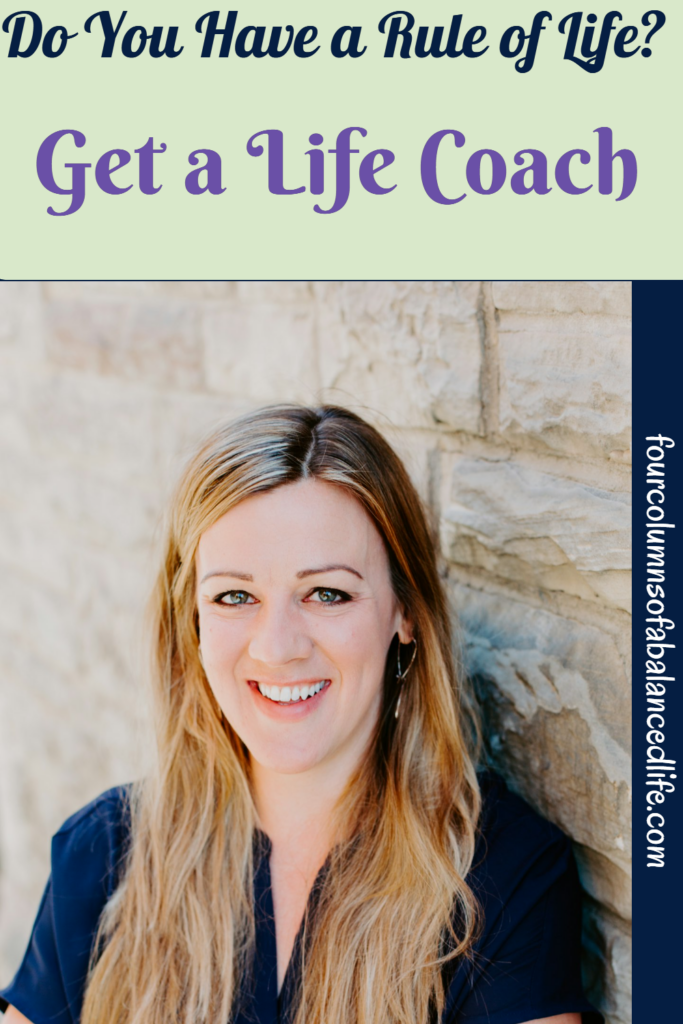
It happens to most of us: at some point we will likely hit a wall of some kind where what we know or how we did things, is no longer working for us. This is the season that reaching out for help is one of the best things you can do for yourself and the people around you! This is where finding a coach instead of a counsellor is going to make the biggest difference. Hear me: I love counselling, and even trained to be one, and it has its’ place. But stuck-ness in the present moment is going to need a coaching approach, not a counselling approach: one that helps you shift your thinking out of your past/present into present/future possibilities. ASK yourself to answer these two questions on a scale of 1-10: how much do you want your life to be different in a year and how willing are you to change it? If the answer is AN 8…you are probably READY for a coach!
How can someone identify if they truly need a life coach, and what should they look for when choosing one?
I think coaching (life or leadership coaching) is most effective when someone is ready for things to be different and ready to do the work to make it different. Maybe a person is feeling stuck, or maybe they are simply just feeling like things are the same and they want things to be different in a year. Either way, coaching is helpful as a thought-process through wise and intentional questions to allow time for thinking and reflection, leading to insights and action. I think many people live life like it is happening to them, when in reality, you can choose where you focus and who you become. We have plans for our finances and our retirement, why do we not have plans for the type of people we want to be, or who we want to be as a leader or manager?
If I was looking for a coach, I’d definitely look for someone you think you can trust and be fully open with – where there is some chemistry. I would also probably tend to encourage people to work with someone who may have experience in areas they wish to grow, but this isn’t a hard and fast rule. That’s why most coaches offer a 15-minute free discovery call to explore questions and chemistry.
What daily habits or mindset shifts do you recommend for personal growth and resilience?
Curiosity is the biggest mindset shift, I think especially for women. We tend to make value judgements on everything, even ourselves (I’m thinking here those statements: “I am too much,” or “not enough”). When I shift from judging…to being curious about what is happening inside and outside, it makes me willing to explore where those thoughts come from or interact with someone different from me, rather than be intimidated or to be hard on myself.
Finding time to give attention to what is going on inside of you is a really important: for some this might be quiet time in the morning or evening, for others this could be walking without listening to a podcast. You need to pay attention to the affect your life is having on you or you wake up one day wondering how you “got here” or (in worst cases) can’t get out of bed because your life has become too much. As a person of faith, I think reminding myself daily that I am valuable and loved because of who I am and not what I do for others is critical.
How do you balance your professional life as a coach with your personal life?
This may be a controversial statement but I think that balance is a bit of an illusion and has become a burden because it feels like it creates polarities (you either have balance or you don’t). For me, the question is more about living integrated or living from wholeness. For example, when I am in a season of high demand (stress or busyness) often times my time and desire for my normal workout routine would diminish. But instead of giving it up completely, I make it my goal to do something active with less intensity (or less time). Sometimes that means I schedule a “walking meeting” with a client or I would do 25 minutes of exercise rather than the hour because I refused to let what was important to me be taken away completely. I still try to live into all the parts of myself all the time, but the intensity shifts with the season. It is not so much balanced living as living-whole; with every part of my life activated.
What role does self-care play in achieving life goals, and what practices do you personally follow?
Ruth Haley Barton says that the best gift we offer to others is our transformed self, which means our entire self needs attention. We are constantly being and becoming and every season demands different types of growth and/or rest. Personally, I have something called “rule of life”; if you imagine that every season of your life requires different fruit/strengths from you, then you need to decide how you are going to grow and nurture your roots. What inputs do you need for this next season? What rhythms? What disciplines? This can include everything from spiritual practices (prayer and meditation), physical exercise, creativity & play and social events.
If you could give one piece of empowering advice to your younger self, what would it be?
Don’t be so hard on yourself, you are actually doing really great!
This was such a great read. I truly believe life coaches can be incredibly helpful when you find the right one,someone who genuinely aligns with your goals and values. I especially loved how Amanda shared, “I believe that every human being is put on this earth with something unique to offer the world, and coaching is the process of bringing clarity and focus to that discovery.” That really resonated with me. It’s so true, each of us has a unique gift waiting to be tapped into.
We are all unique and we need to tap into those strengths.
I thoroughly enjoyed this interview. So many people in this area can be aloof or above or just have a superior feel about them. I LOVE how real she is.
Yes, she is real, down to earth, and vulnerable.
That’s an empowering read. Esp for women. It’s weird how people have been defining what’s appropriate for a woman to do in any setting for decades!
I find it kinda more complicated to take all those myer briggs test and all to become more self aware, but I hope I find time to do one of those one day.
Coaches make for incredible mentors in life. Amanda’s story is very relatable and shows her credibility!
Very interesting interview with tons of inspiration. Sometimes one just needs a little help to have a clear vision of goals and purpose!
This is a great read. What a good interview, I just know that we have different struggles in life but we are build to get pass through it.
This was such an inspiring profile, I love seeing leaders who focus on purpose, empathy, and impact.
This is definitely an interview that makes me think. And at such a great time as I am setting my goals and ambitions for the year.
This is such a great interview and shows that she was destined to do well and have some kind of leadership role from a young age. If I was to give my younger self empowering advice it would be to believe in myself and to ignore those that don’t expect much of me as I will prove them all wrong over time – I can safely say I did but it took a while for me to develop confidence in myself.
I can tell you from experience this woman is the real deal! She is good at unlocking many areas of discovery within someone!
I hired Amanda 4 years ago. She’s actually the best!
I second that.
This an absolutely amazing interview. Amanda is clearly a very inspirational person. The fact that she turned her childhood experiences and leadership skills learned into her career is incredible. Thank you for taking time to share this motivational life story xx
Some coaches can be amazing for sure. I like what you said with… I like lead from a place that was authentic to me. I think this is important. You can’t be everything to everyone.
You are all very kind and it is a privilege to journey alongside others, especially if my story or skills can support other people’s journeys.
hearing about someone finding their own path and balance makes me appreciate how unique our journeys are.
apprecaite that you explained Amanda’s approach to balancing work and personal life without sounding preachy. It felt relatable and sort of inspried me to try.
This is an interesting interview. It is always fascinating to read about unique careers and how people ended up doing those jobs. I have never met with a life coach and it sounds such an interesting career path.
This is such an inspiring interview. I might have to get a life coach one day. I’ve been tempted.
She sounds like an amazing lady. I too have been pretty strong headed and go after things I want. I never imagined ending up blogging. But I love it and wouldn’t change it.
I know how hard to be a life coach but I admire them for doing this profession. They exert all their efforts, patience, and understand to everyone they spoke with. And I know Amanda is a great person and I love her story.