
Asclepieion of Pergamon: Where Ancient Healing Meets Faith
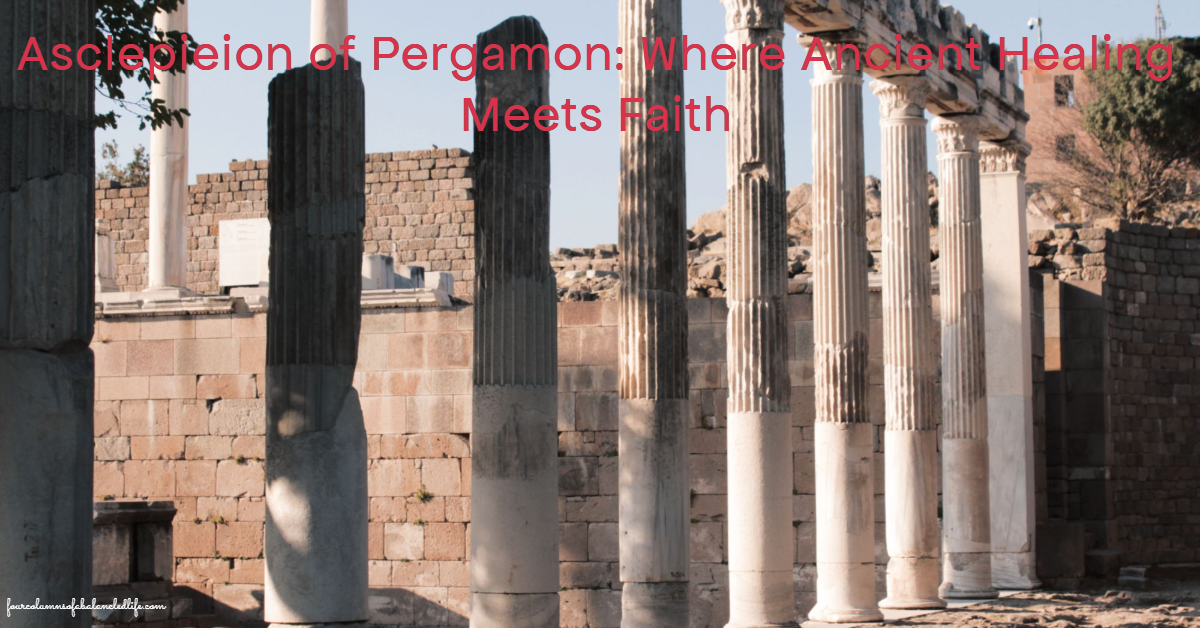
Our visit to the Asclepieion of Pergamon, near modern-day Bergama, was a place where people came seeking healing.
From Istanbul, with its remarkable meeting of East and West, to Cappadocia and its extraordinary landscapes and Christian heritage, to Ephesus, where we walked through one of the ancient world’s great cities, and Hierapolis, with its ancient thermal waters, each destination has added another piece to our understanding of this remarkable country.
Our journey through Türkiye continued to another place where history, faith and the human search for healing come together: the Asclepieion of Pergamon.
The Asclepieion was one of the most famous healing sanctuaries of the ancient world. Dedicated to Asclepius, the Greek god of medicine, it was a place where people came seeking relief from illness through a combination of medical treatments, water, exercise, rest, spiritual practices, and faith.
As we walked through the ruins, I couldn’t help but think about the connection between Pergamon and Hierapolis.
At Hierapolis, the thermal waters were central to the healing experience. At the Asclepieion, water was again part of the story, but this time it was woven into a much broader approach that considered the body, mind and spirit.
And just as we had experienced in Cappadocia and Istanbul, the deeper we looked, the more layers of history we discovered.
Walking Into an Ancient Healing Sanctuary
The Asclepieion lies near modern-day Bergama, in western Türkiye. Its history stretches back to the 4th century BCE, although the sanctuary developed considerably over the centuries and became particularly important during the Roman period.
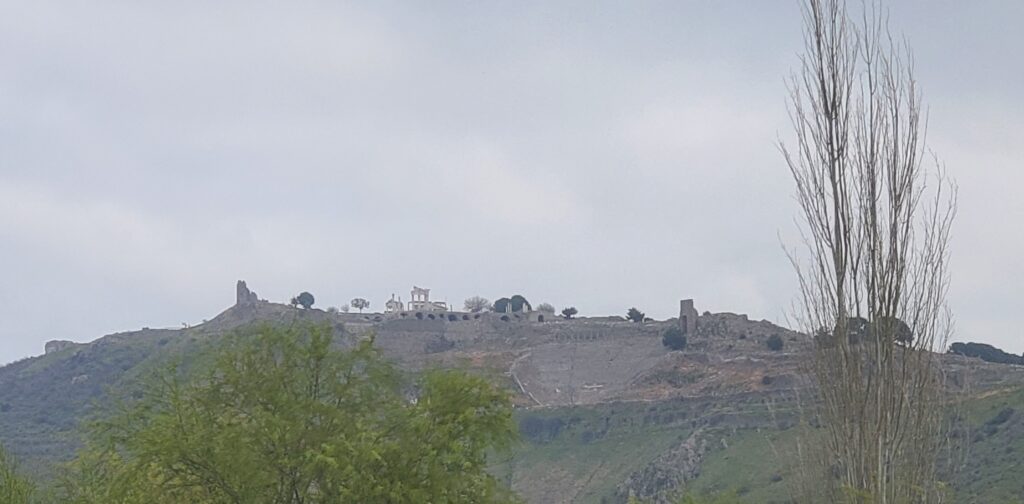
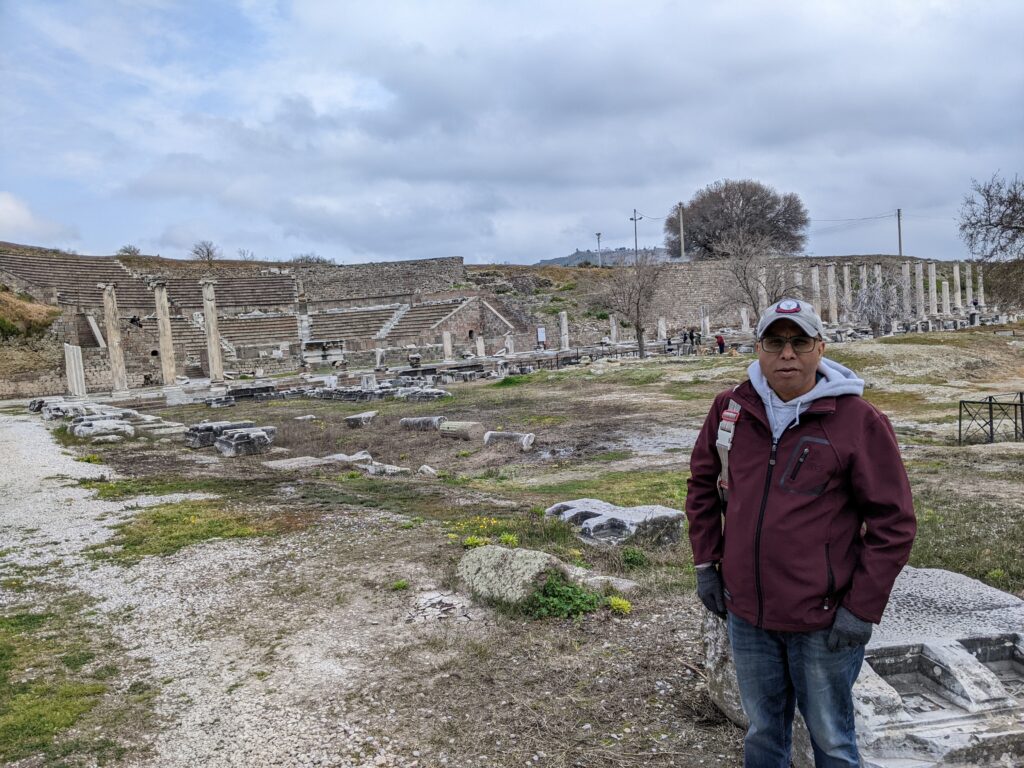
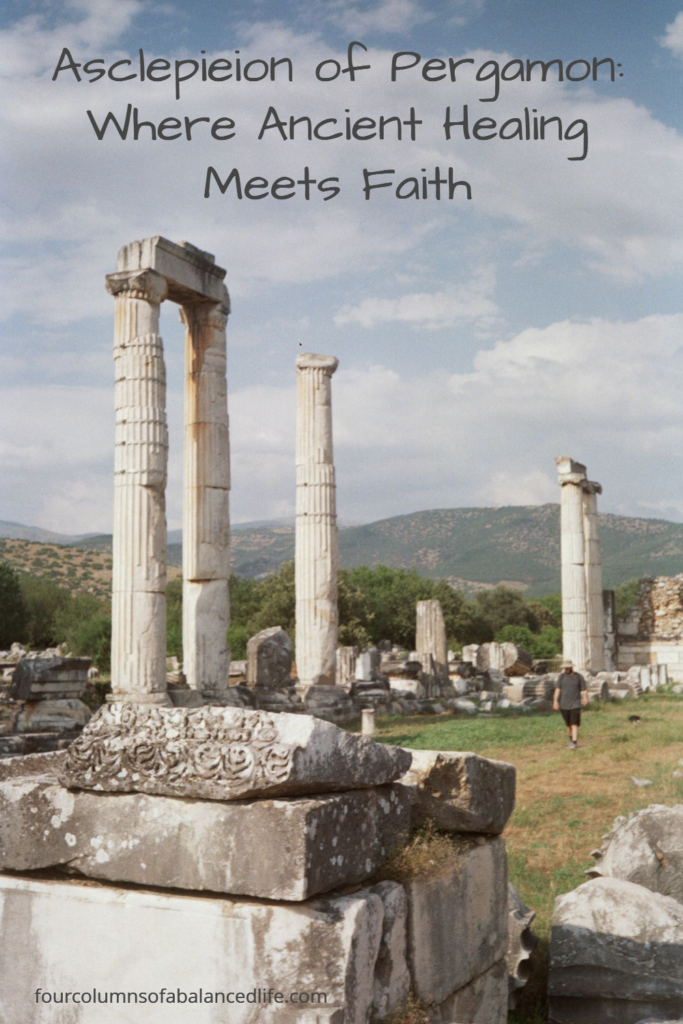
Walking into the site today, it is easy to see the remains of temples, columns, pathways and treatment areas.
But I found myself trying to look beyond the ruins.
Who were the people who came here?
What were they hoping for?
Were they frightened? Exhausted? Desperate for an answer?
For them, this was not an archaeological site. It was a place of hope.
That thought stayed with me as we explored.
The Sacred Way
One of the most memorable features of the Asclepieion is the Sacred Way, the ancient road connecting Pergamon with the sanctuary.
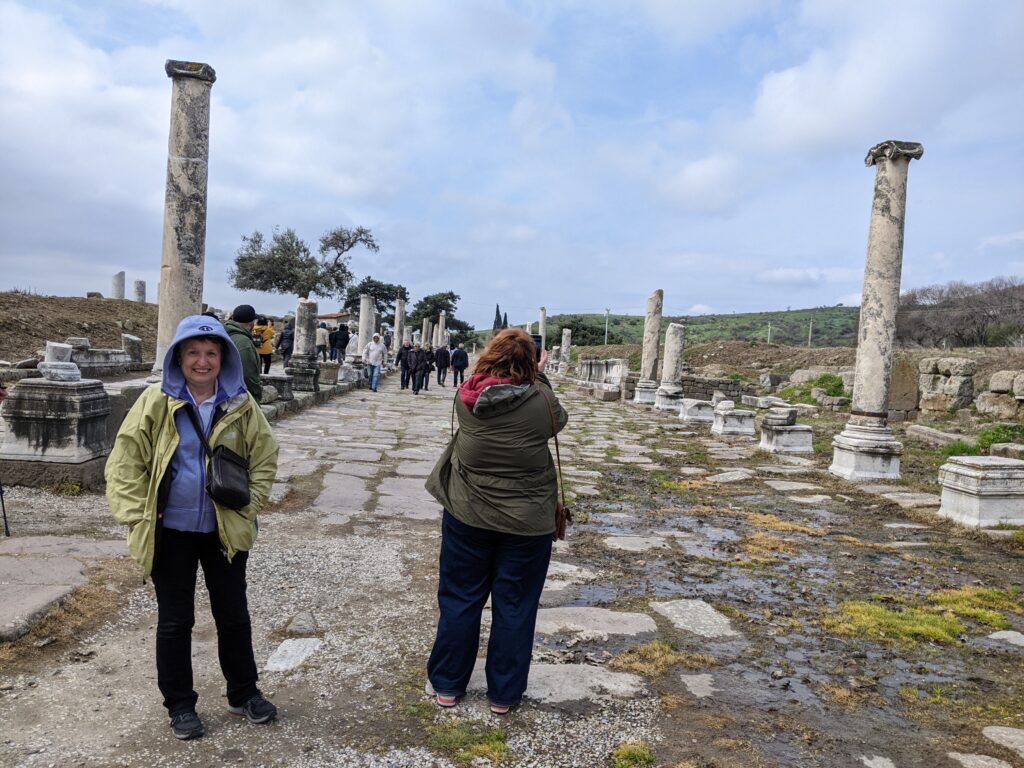
The approximately one-kilometer journey would have gradually taken patients away from the city and toward the quieter surroundings of the healing center.
I liked the symbolism of that journey.
Even today, when we are dealing with stress or illness, sometimes we instinctively want to get away from the noise.
We look for somewhere quieter.
We walk.
We sit beside water.
We spend time in nature.
We pray.
We rest.
The ancient visitors to the Asclepieion were doing some of these same things, although their understanding of medicine and faith was very different from ours.
As I walked along the remains of the Sacred Way, I thought back to our journey through Türkiye.
Every place seemed to reveal another layer.
Istanbul had been about civilizations and empires.
Cappadocia had been about landscape, faith and resilience.
Hierapolis had brought us face-to-face with ancient healing through its thermal waters.
And Pergamon seemed to bring all of those themes together.
Healing the Whole Person
What fascinated me most about the Asclepieion was the idea that healing was not limited to treating the body.
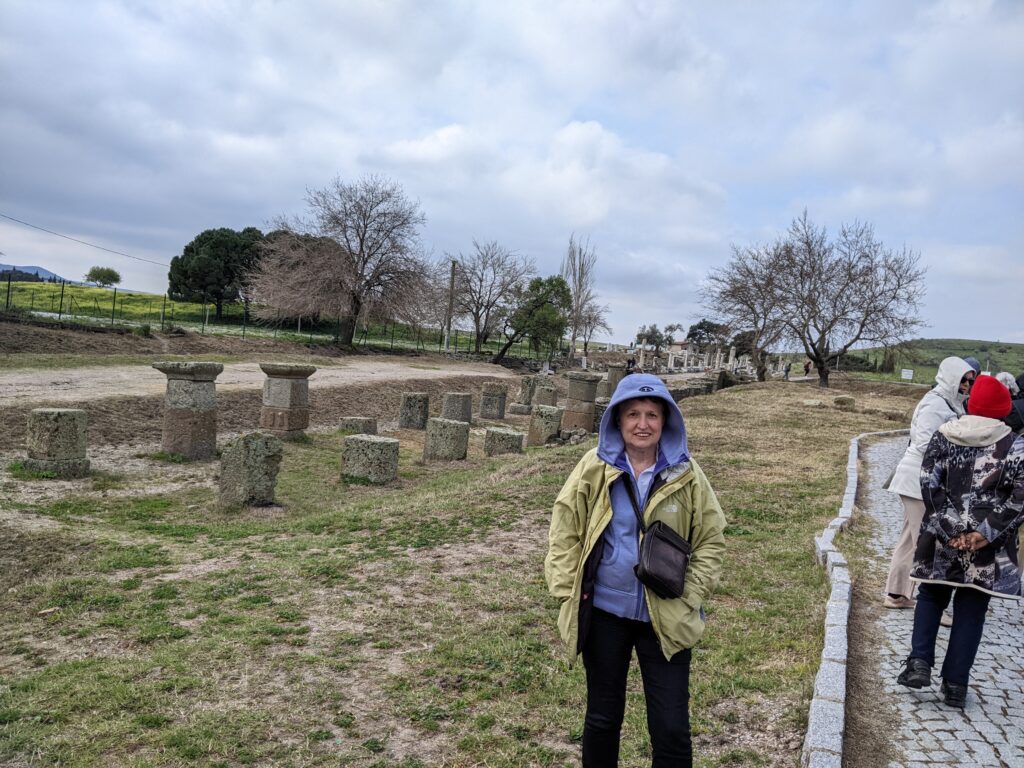
Patients could receive herbal remedies, ointments, massages and physical treatments. Water was incorporated into the experience, and exercise was encouraged.
But there was also a strong spiritual and psychological component.
Patients participated in rituals and could sleep within the sanctuary in the hope of receiving a message from Asclepius through a dream.
This practice, known as incubation, is one of the most fascinating aspects of ancient healing.
Whether we interpret it through the lens of religion, psychology or ancient medical practice, it reveals something very human.
People wanted to understand their illness.
They wanted reassurance.
And they wanted to believe that recovery was possible.
From Hierapolis to Pergamon
Visiting Pergamon after Hierapolis made the contrast particularly interesting.
At Hierapolis, the thermal springs remain one of the defining features of the landscape. The warm mineral-rich waters helped make the city a destination for people seeking health and relaxation.
At Pergamon, the healing experience was broader.
Water was important, but so were movement, rest, dreams, music, theatre and spiritual belief.
The two sites made me wonder whether the ancient world understood something we sometimes forget.
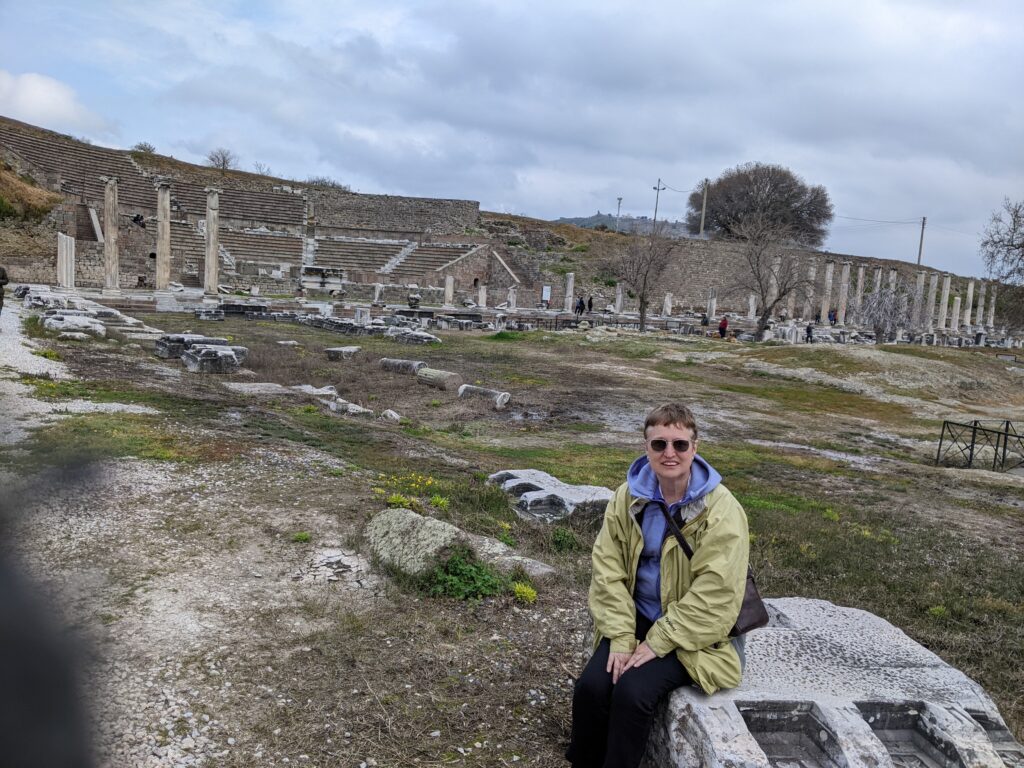
Healing is rarely just one thing.
Modern medicine has given us extraordinary tools, but recovering from illness can still involve much more than medicine alone.
We need rest.
We need encouragement.
We need people around us.
We need hope.
And sometimes we simply need a quiet place to breathe.
The Sound of Water Underground
The cryptoporticus, an underground vaulted passage, was another fascinating part of our visit.
Patients could walk through this cooler, darker space while the sound of flowing water created a peaceful atmosphere.
After spending time in the Turkish sun, I could immediately appreciate how different the environment would have felt.
There was something almost meditative about imagining people walking through the passage thousands of years ago.
The sound of water.
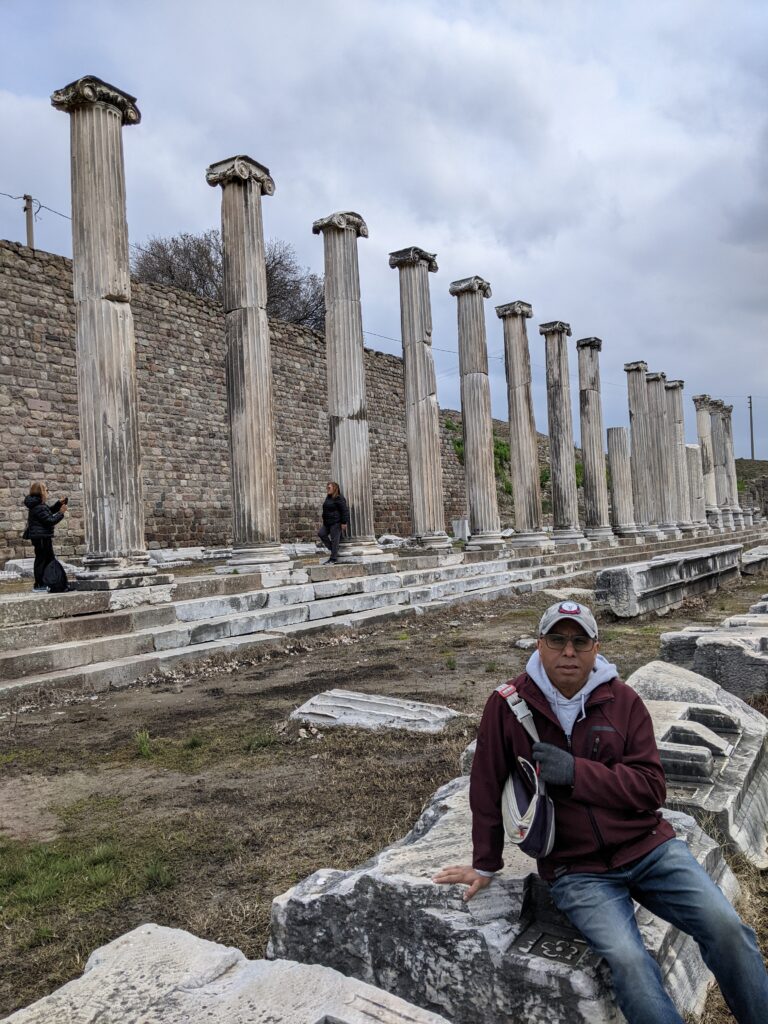
The coolness of the stone.
The quiet.
It reminded me again of Hierapolis, where water was so central to the experience of the ancient city.
Different place.
Different form of healing.
But the same human attraction to water as a source of comfort and renewal.
A Theatre in a Place of Healing
The Asclepieion also had a Roman theatre capable of holding thousands of people.
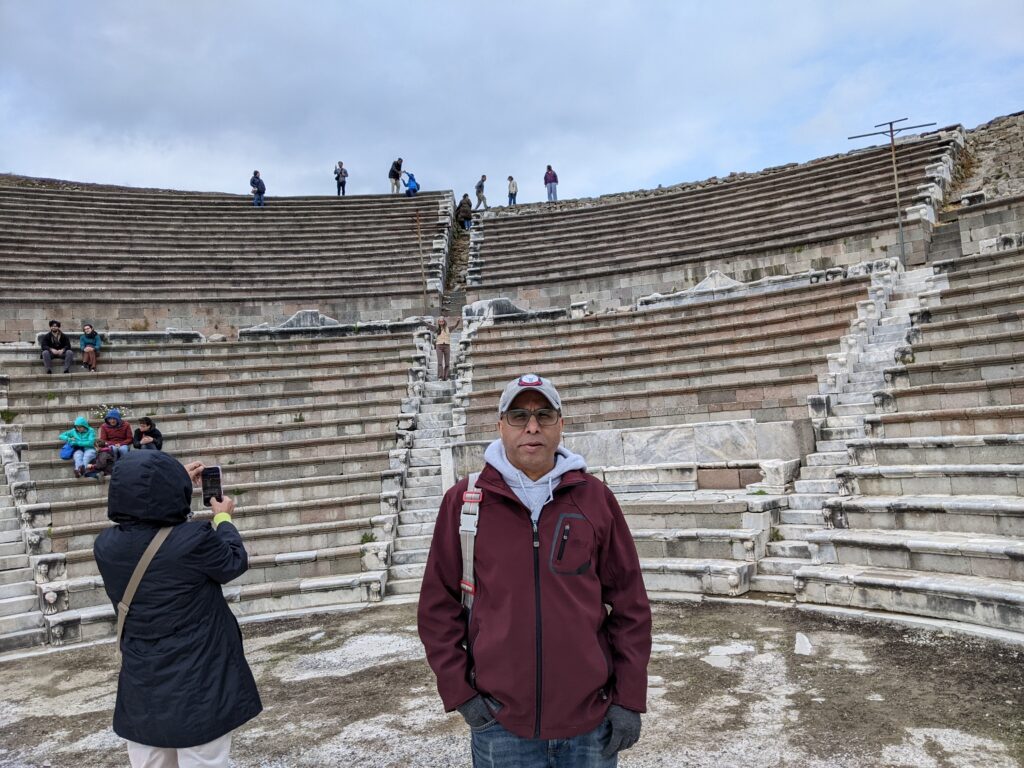
At first, that seemed like an unusual feature for a healing center.
But the more I thought about it, the more it made sense.
Healing isn’t always about medicine.
Sometimes you need music.
Sometimes you need laughter.
Sometimes you need a story that takes your mind somewhere else.
The ancient world understood that patients were people, not simply illnesses.
The theatre gave them an opportunity to experience something beyond their condition.
Standing there, I couldn’t help but think about how modern healthcare increasingly recognizes the importance of mental and emotional wellbeing too.
Galen and the Medical Legacy of Pergamon
The Asclepieion was also connected to Galen of Pergamon, one of antiquity’s most influential physicians.
Born in Pergamon, Galen studied medicine and eventually travelled to Rome, where he became physician to members of the imperial court.
His writings influenced medical thought for centuries.
Knowing that as we walked around the site made the Asclepieion feel more significant.
We weren’t simply standing among ancient ruins.
We were walking through a place connected to the development of medical knowledge itself.
The Stories of the People Who Came Here
One person who helps us understand the Asclepieion from a patient’s perspective is Aelius Aristides, a prominent orator who spent considerable time at the sanctuary.
He recorded his experiences, illnesses, dreams and treatments in his Sacred Tales.
His writings allow us to glimpse the personal side of the sanctuary.
And that is what I found most moving.
Archaeological sites can sometimes feel distant.
We see broken columns and imagine ancient civilizations as something completely removed from our own lives.
But Aristides reminds us that people were people.
They worried about their health.
They searched for answers.
They prayed.
They dreamed.
They hoped.
We do the same.
Leaving Pergamon
As we left the Asclepieion, I found myself thinking about that simple word: healing.
The ancient physicians did not have the medical knowledge we have today. Some of their treatments were based on beliefs that modern science would not support.
But their patients came here with the same basic desire we have today.
They wanted to get better.
They wanted relief.
They wanted someone to help them.
And they wanted hope.
That is what connected Pergamon to our earlier experiences in Türkiye for me.
Istanbul, Cappadocia, Hierapolis and Pergamon are very different places, but together they tell a much larger story about people, faith, culture and our constant search for something beyond ourselves.
Our journey through Türkiye wasn’t simply a trip through ancient history.
It became a journey through the human story.
And Pergamon was another unforgettable chapter.
Really enjoyed this – with your love of food and travel from working in hotels across the world, it makes sense that these historical stops speak to you so much. Looking forward to more from your future destinations.
What an incredible place filled with so much history! I really enjoyed learning about the Asclepieion of Pergamon and its connection to ancient healing. It’s amazing to see how people approached health and wellness so many centuries ago.
I would love to see that in person one day! I love the views, the history, and the spirituality behind it. It’s absolutely amazing.
I would love to see it in person way day. It definitely looks peaceful and rich with history.
Türkiye is on my bucket list. I hope I can visit the Asclepieion of Pergamon one day. It’s a fascinating place.
If I ever get to Türkiye, I’ll be sure and visit this place. You’ve done a great job of showing the history and attraction. Thanks.
It would be incredible to go here in person to check it out. The history behind this is so fascinating. It looks like you had an amazing journey there. What a cool spot to see!
I really do love how well you capture how the Asclepieion of Pergamon balanced physical therapy with spiritual and mental well-being. The holistic treatment of blending sacred springs, dream interpretation, and also theater closely mirrors the framework of modern integrative medicine. I have always much preferred holistic treatment.
Walking through old historical ruins always makes you reflect on how similar human needs were back then. Seeking quiet spots to recharge and heal never really changes.
This looks like a place I’d love to visit. I’ve had chronic pain for years and life is hard. I’d have hope that I could possibly be healed here. Even if I can’t be healed, I know when I go home to Jesus, I’ll be fully healed.
What a fascinating place to visit. There’s so much history, and it gives so much to think about.
This place really reminds me of Pompeii, especially the way ancient sites let you imagine what everyday life looked like centuries ago. I love how the Asclepieion connects ancient healing, architecture, and faith in one fascinating setting.
The way the Sacred Way and the underground passage with water created a gradual shift into quiet is thougful. Connecting physical treatments with rest, dreams, and even theatre shows how holistic their approach really was.